Ace Combat 8, and the meaning of a fighter jet
Rhianne Ward
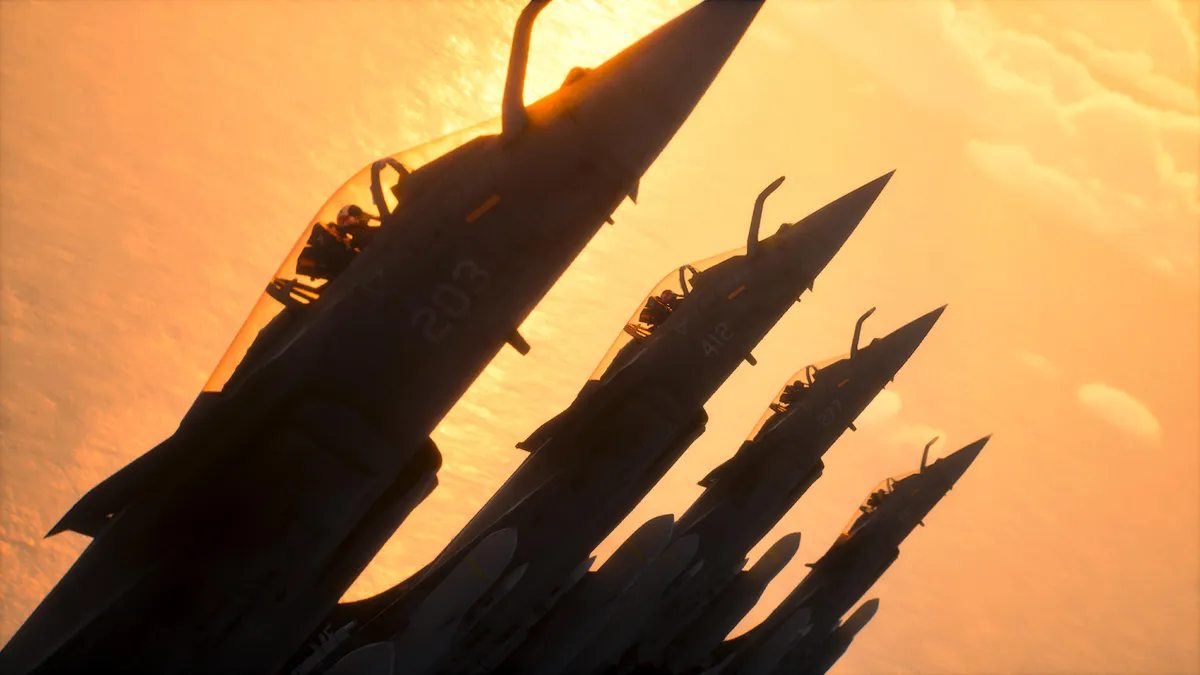
I never really understood the hype around fighter jets. They always felt like the kind of thing you ogle at as a child as you would a racing car. Wow, look at how fast they go! And they're so noisy too, it's exciting! There is undoubtedly a surface level coolness to a vehicle that goes really quick, even if the why of it all obviously doesn't tend to occur to kids at that young age. However, you get older, and the appeal sort of wears off once you understand the mechanics of the thing. Oh, they run on gallons of fuel? The stuff that's obliterating the environment? Okay. And you say they're used overseas to drop bombs on innocent civilians? Oh, that's not good. No matter how cool it is to have one soar overhead in less than a second or feel the primal rush of that engine roar course through your body, the reality of the situation can't help but pierce the veil.
So where does Ace Combat fit into this equation? What does its eighth mainline instalment have to say about fighter jets? In a way, not much. In its early hours, the game is very much targeting that sort of base delight in controlling a thing that goes fast. That's the initial draw: punching the accelerator and experiencing the thrill of your plane breaching the sound barrier, or performing an emergency zero-G turn to avoid incoming missiles. Later on, the realisation comes that different planes feel different to fly. Changing vehicles from one mission to the next and being forced to adjust to how quickly this new one spins speaks to a game that has mastered the raw feeling of piloting these things. You feel the weight, or lack thereof, of every unit, and if you stick with one long enough, how fast you can manoeuvre and what you can get away with in split-second encounters becomes second nature. For all intents and purposes, you are the plane.
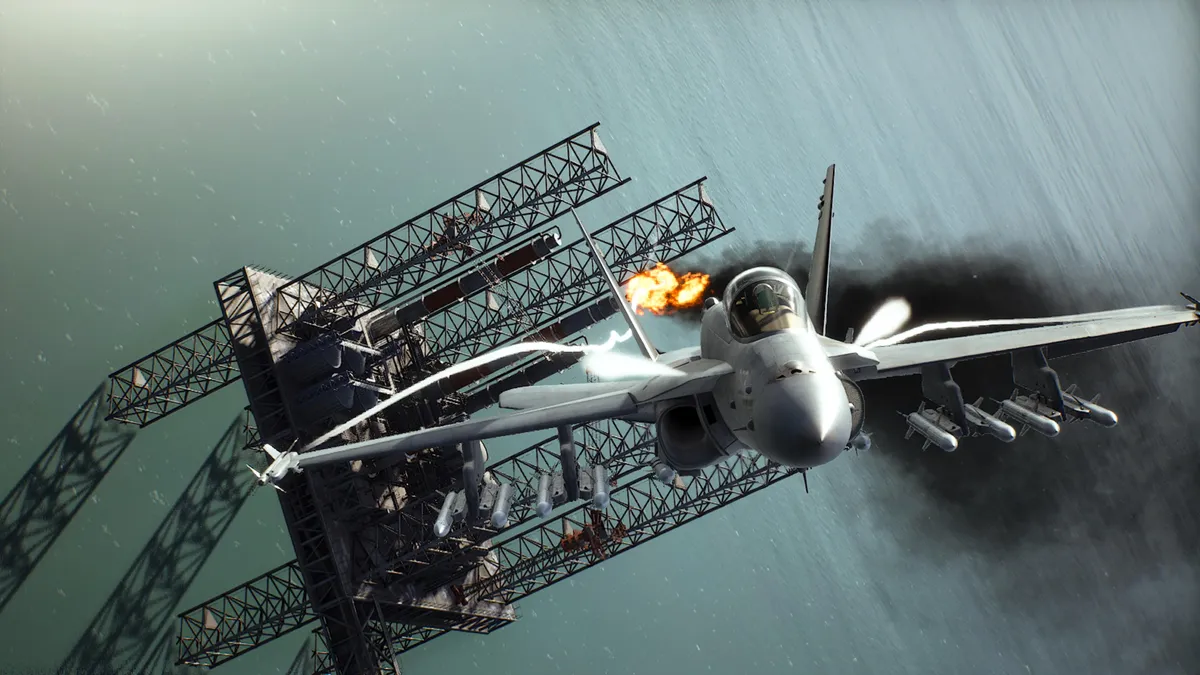
All of this and more works to convince you quickly and efficiently that fighter jets are cool, and I can't deny it. After all, I'm only human, and narrowly avoiding a head-on collision with a skyscraper by hitting your brakes at the last second evokes a euphoria in me that's hard to quantify in words. This feeling is enhanced by the surrounding environment as well. Ace Combat is a series known well for its gorgeous locales, and Wings of Theve is no exception. Areas vary from wide oceans to vast tundras, and a handful of cities to weave through, to name but a few.
These all look predictably stunning, but they're not just a pretty picture. The design of each mission complements its landscape beautifully. One level tasks the player with staying as low to the ground as possible, so as not to get targeted by deadly railgun attacks, but the area is primarily hills and valleys, so the pilot needs to take out missile-launching ground targets while simultaneously keeping an eye on their immediate surroundings, all within a strict time limit. In another mission, you are protecting an enormous space elevator from a land battleship, and soon or later you'll find yourself ducking and weaving between the elevator's huge pillars trying desperately to find openings to strike. One other mission has you evading orbital laser attacks, and when they're fired, the energy beams erupt through the cloudline, leaving massive craters in the sky. These places you fly through aren't just nice to look at; they're very intentionally picked and utilised to full effect, and even react dynamically to the encounters taking place within them. It's really impressive stuff, and no two missions ever felt samey after more than 20 hours.
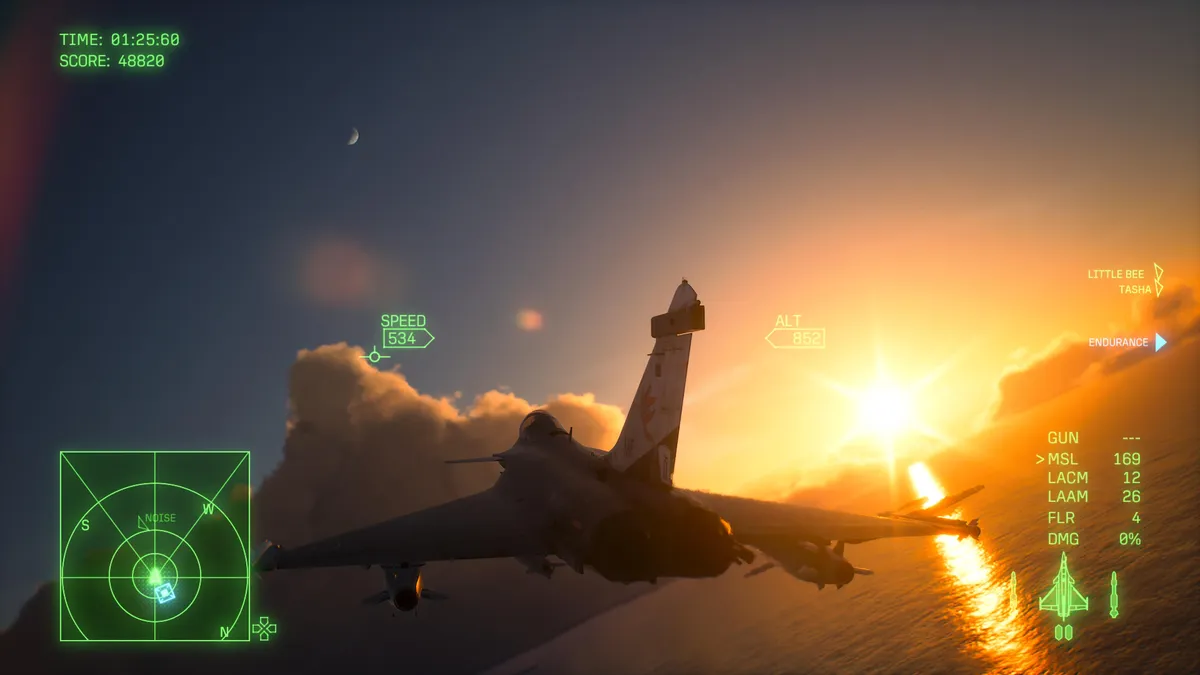
The appeal of Ace Combat, therefore, goes beyond the simple pleasure of flying a plane very fast. There's more to a fighter jet than that, this game suggests. It's not just the way a plane looks or feels to control, but the context surrounding it too. Not just how it flies, but where, and for what purpose. Like everything in this world, nothing is just straightforward. There are always beautiful details to uncover, if you go looking for them, and Ace Combat 8 is a game that considers them paramount to its overall experience. However, there's another factor; the one that made me fall in love with this game.
A few years ago, I got really into Formula 1. It was something I had a vague passing interest in growing up, but never to any great extent. When Lewis Hamilton came around, I was interested because he was a young British guy proving he was the best in the world. I remember being sat down on my parents’ bed watching as he snatched victory from the jaws of defeat and won his first world championship at that miraculous Brazilian Grand Prix. I fell off the sport in the years that followed, but around 2020, when the first Covid quarantine hit, I watched Netflix's Drive to Survive docuseries, then hours and hours of YouTube highlights, and all of a sudden, I fell head over heels. However, what drew me in wasn't the fast cars or the marvels of engineering, though that stuff is pretty cool. No, what grabbed me was the drama. The people at the heart of the action, giving their all and coming to blows over it. Formula 1 is a storytelling machine, where a driver can start the season one way and by the end either unlock their true potential or fall short of expectations. Pair that with a sport where cars go up to 200 MPH, and all of a sudden you're glued to the edge of your seat, where a person's entire career all rides on whether or not they can pass their opponent round a blistering high speed corner. Very few sports come close to that kind of high.
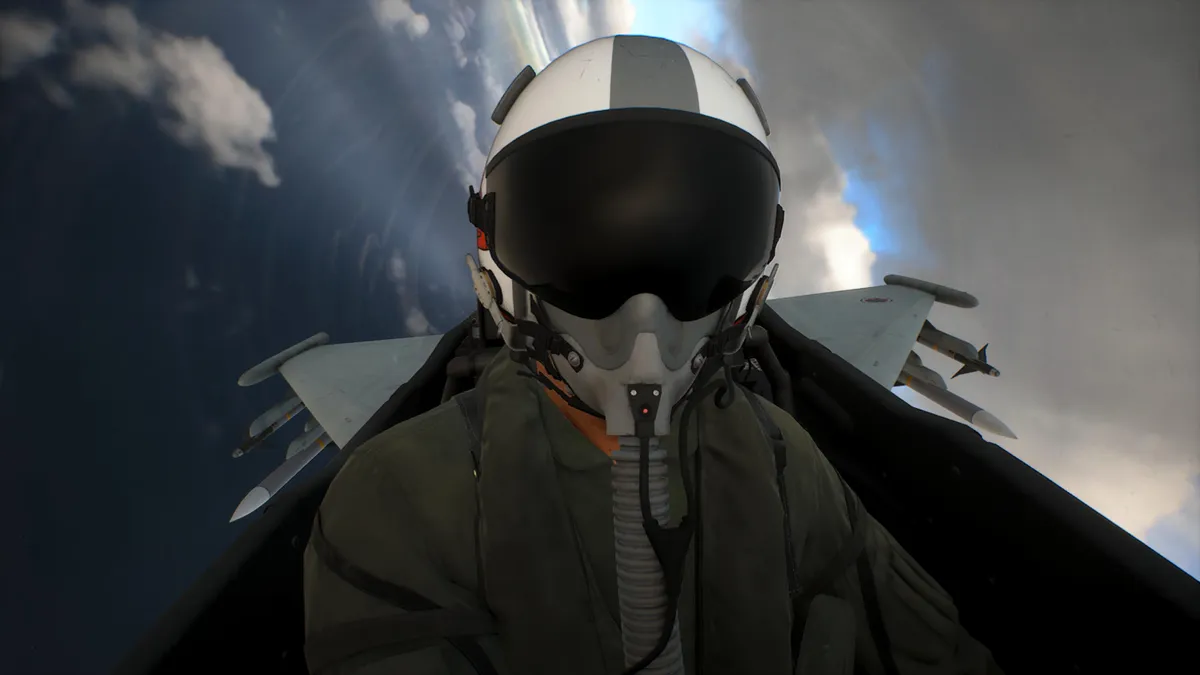
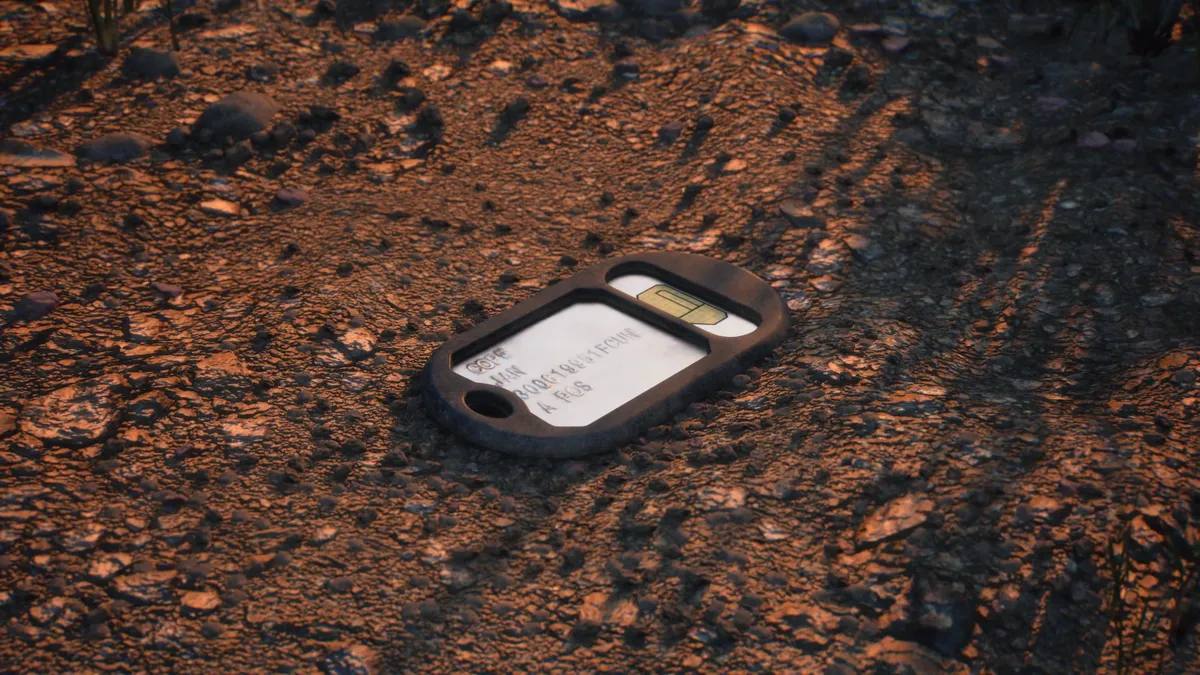
So, Ace Combat 8, as fun as it makes its flying mechanics and scenario designs, is ultimately propped up the most by the characters at its heart. You are Rex, an FCU Navy pilot rescued from the open sea and eventually made the leader of Joker Flight, inheriting the title “Wings of Theve” from the now deceased Jan Cope as part of a military morale boosting initiative. Cope was a symbol for the FCU, but never a true ace, as he decided to never fire a single shot and instead became a master of evasion, while his squadmates provided covering fire. When he passes and you are tasked with maintaining his manufactured legacy, you change Joker Flight into something quite different. Not simply a symbol of hope, but an actionable force against your opponents, the invading Sotoan army. All of a sudden, with your influence, the fate of the war begins to shift.
Your squadmates are Baxter, Tasha, and Coster, and each of them fulfils a different role in the story. Baxter is a mentor figure of sorts – hence his codename, Professor – who guides you through the basics of flight and combat early on. He's your wingman, and sometimes makes callouts during combat, suggesting strategy changes and keeping you informed on the immediate threats. He's the oldest of the group, and you get the sense that he might be reaching a limit to how much tragedy and violence his body and mind can take. Tasha is a high schooler, and a stunt piloting prodigy to boot. She's brought on due to her particular talent for putting on a show, which benefits the initial Wings facade. She's plucky and irreverant, granting you the nickname “Ray” almost immediately. An energetic force, not yet jaded by the horrors of war However, with your arrival and the subsequent increase in Joker Flight's tactical importance to the FCU, she is forced to decide whether she's willing to take the shot when it counts. Coster is a quiet sort, Tasha's wingman and a great juxtaposition to her chatty nature. Nevertheless, his words are few and far between enough that they carry a certain weight whenever they're spoken. Throughout the course of the game, he starts to warm to your presence, and by the end he's greeting Rex with a smile. All of these characters fill certain familiar tropes, but there's a very clear throughline for how they change and evolve over the course of the war. The Baxter, Tasha and Coster you know at your introductions are not the ones you say farewell to at the end.
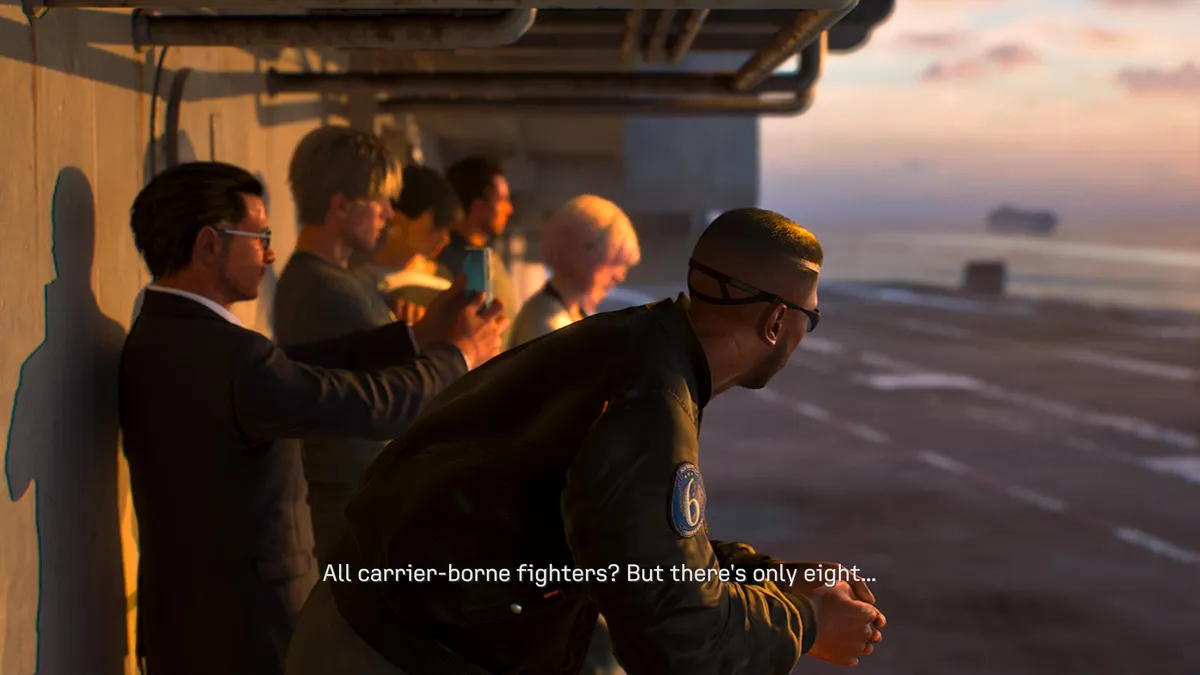
The supporting cast aren't quite as developed, but they certainly have their moments. The Ace Combat fandom have taken a particular liking to Kate Evans, leader of Queen Flight and your frequent ally on missions. She has an arc involving what it means to be a leader, as she watches you lead Joker Flight to success after success. She wonders if she could do more, not just to be of help to the war effort, but to keep her squadmates safe. Her arc isn't exactly resolved, but her pontifications suggest an inner dialogue that makes her feel like a fully formed person with a lot to figure out. There's such texture to every character in Ace Combat 8, even the antagonists, whose seeming religious fanaticism and national fervour belies a dark truth that they are simply tools being exploited by invisible higher powers who see them as pawns on a chessboard and not human lives worth preserving. There's an air of melancholy to the proceedings here; a suggestion that war, no matter how righteous, is a tragedy, and the only real victory is when it ends, and even this is a hollow one when considered within the scope of a million lives lost and the devastation of civilian infrastructure.
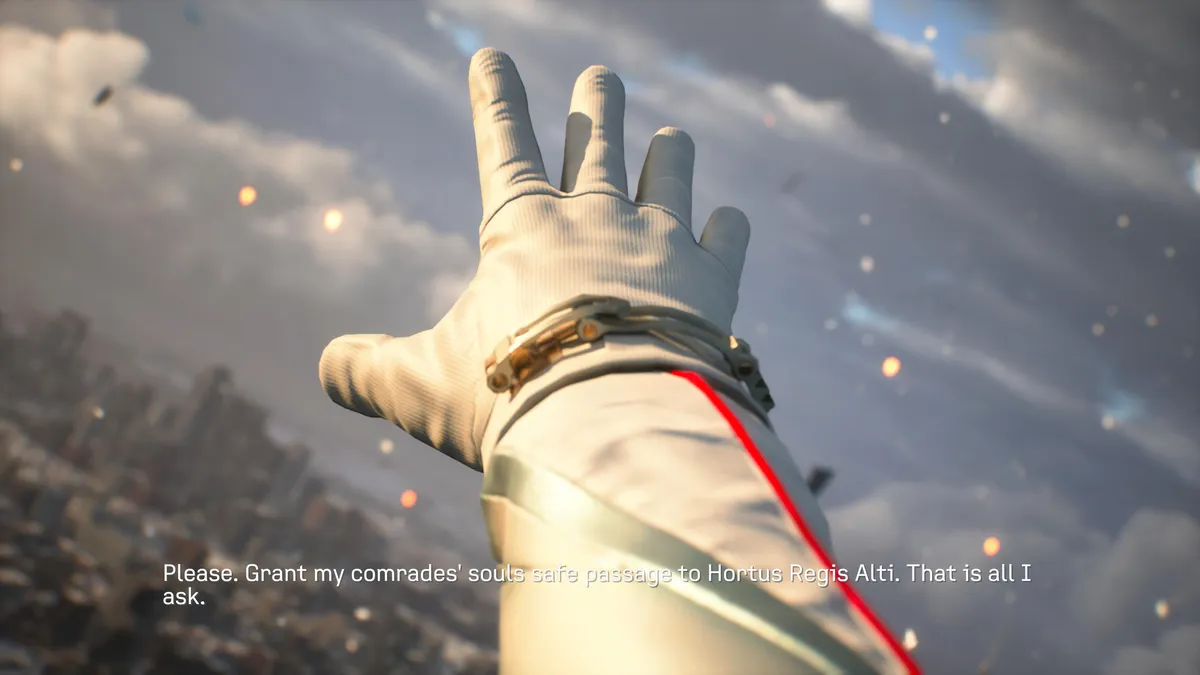
I'm getting ahead of myself a bit though. Before that feeling set in, at around the midpoint of the game, my feeling was that the fighter jets of Ace Combat 8 are just extensions of each character's body, especially Rex. Our voiceless protagonist might as well be the plane he pilots rather than a human being unto himself, given the complete void where a personality would typically be. However, the game resists embracing this fact in its totality. For one, almost every cutscene takes place in the first person. Indeed, the first time we inhabit Rex, he's not in a plane at all. Rather, he's in a life raft of all things. Attention is constantly drawn to the fact that Rex continues to exist outside of his cockpits. When Cope is killed, you're forced to eject from the plane, and once again you are separated from your purpose. Throughout each mission, you're given opportunities to answer questions that come in over the radio with a simple “yes” or “no”, but that simple act suggests a shadow of autonomy for what is usually a soulless avatar for a game like this. This extends to Baxter, Tasha, Coster, and the rest of the cast. They walk and talk and move in manners all their own. It can't help but make me imagine a world where we don't have to fly thousands of feet above sea level, surviving one death-defying outing after another. What if Coster could play his guitar in peace? What if Tasha could finish school? What if a million things, none of which can be true so long as the war continues.
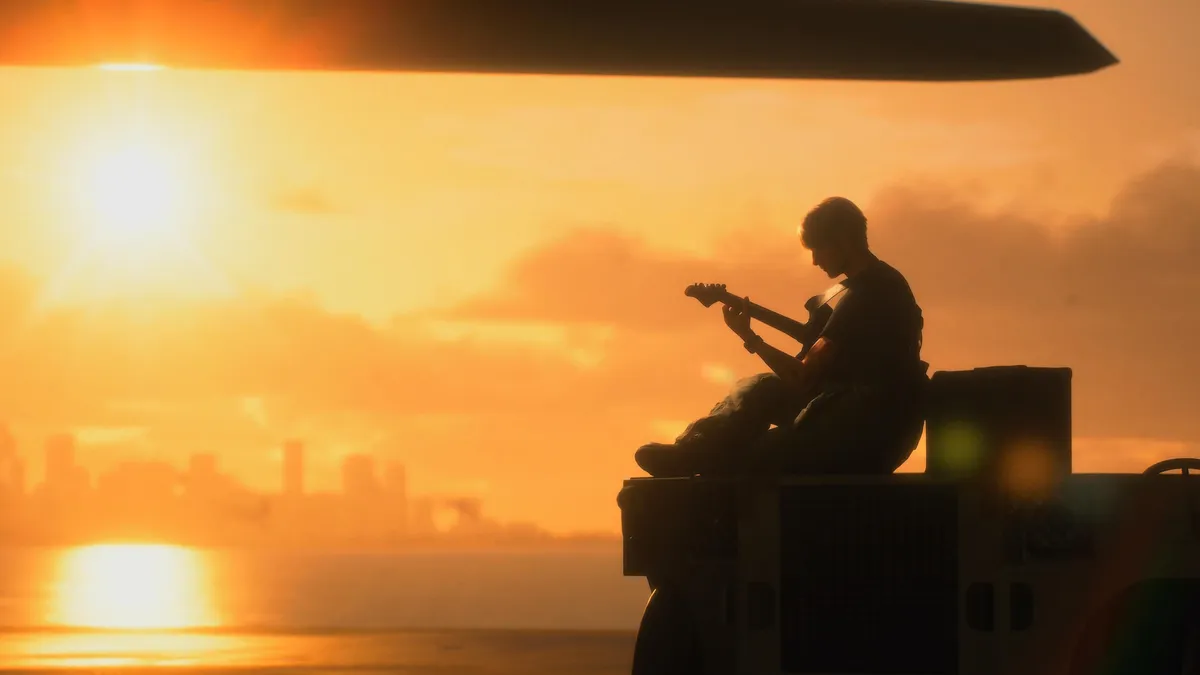
This all has the knock-on effect of making the inevitable character deaths hurt even more. Spend enough time with them, and your comrades in arms become more than just the machinery they pilot. They have hopes and dreams; they would rather be anywhere else. Nobody deserves to be where they are in this game, so when their lives are cut short, you share in that pain. Late in the game, a character dies when a stray bullet just happens to sneak through the cockpit and pierce their lung. Up to this point, I had endured machine gun fire, missiles, and even railguns, so to have a moment like this occur was sobering.
Very quickly, Ace Combat 8’s perspective on jets becomes clear. The game does not pretend that fighter jets aren't cool. They are, and so is piloting them. Indeed, the developers put a lot of effort into making each aircraft feel amazing to control, and have the art of constructing scenarios that maximises the excitement of controlling them down to a science. They even bring in planes from real life so that the aviation nerds get to live out that fantasy. However, stay with the story long enough and it becomes clear that the game draws a distinction between the inherent coolness of flying a jet and their horrifying capacity to enact violence.
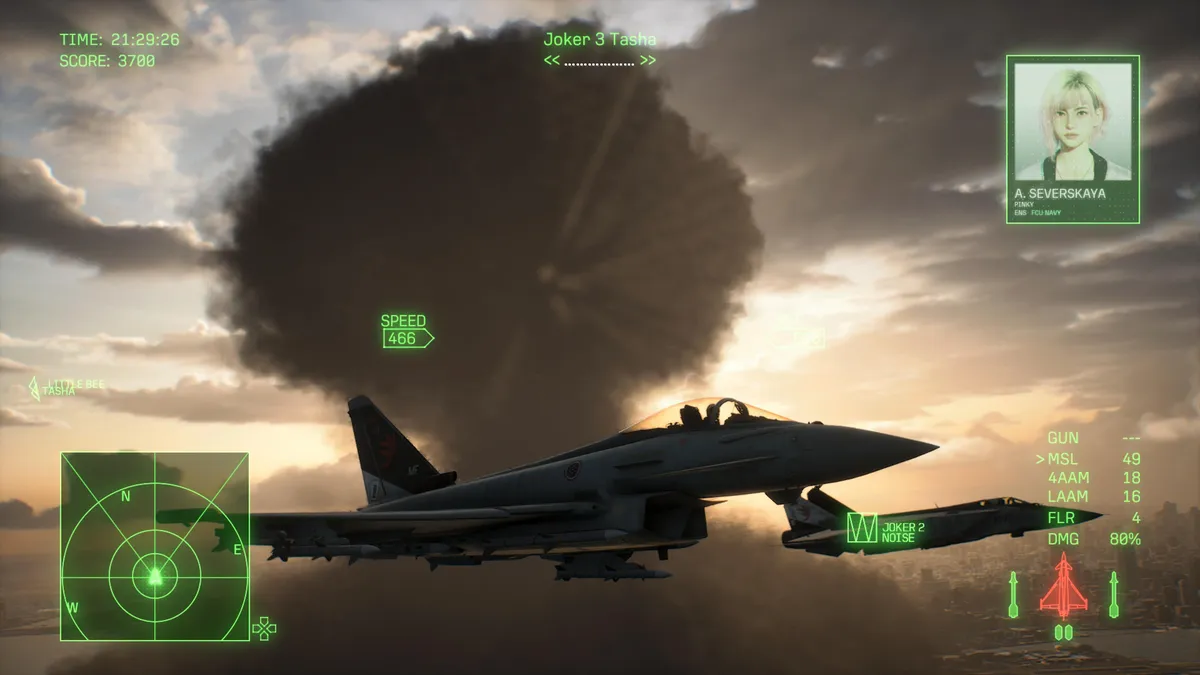
A moment that stands out to me is when you're tasked with taking out a land battleship, an act which will undoubtedly end the war sooner and save countless lives. However, upon dealing the final blow, the Sotoans aboard the vessel scream over the radio that they are being boiled alive as the ship goes down. You listen to their agonising final moments, and then…nothing. Mission Accomplished. Later on, a squadron of fresh, young recruits appear to face your team down, and upon taking one out, they beg for anyone listening to tell their parents they love them, but before they can get all the words out- BZZT. No signal. There is a clear good and bad side in Ace Combat 8, but the game refuses to let you oversimplify it in that manner. On either side of this conflict, there are people. Ordinary people, containing multitudes, who just happened to be born on their side of a border.
So fighter jets are cool, but also a tragedy. They do not, and cannot, exist solely for our entertainment. In the name of good or evil, they are built to destroy all the same. Fighter jets are not the people piloting them. Those people are just people. No, fighter jets are not an extension of them, but of war itself. To use them suggests something deeply wrong, almost inhuman, is happening to necessitate them. Even the promise of possibly becoming an ace pilot renowned throughout among your peers is treated with hesitation.
The two main antagonists of the game, Shadow 22 and Moon 11, are portrayed as tragic figures, whose obsession with excellence tied into a misplaced sense of national duty results in their committing war crimes. They perceive themselves as above the rest of the world, not to be tied down by such petty trivialities as international law and basic empathy. They don't fight to end the war, they fight to prolong it, and it isolates and ultimately destroys them. The game warns of becoming that person, so absorbed in the chase for individual accolades that you lose the people who helped get you there. Your world becomes a perpetual state of violence. What kind of a life is that? The game makes a point of saying that Shadow 22 and Moon 11 are, notably, nobles. They don't have the same need for community as us, the presumed common folk, and that's why they lose.
Fighter jets are cool, but they don't matter. People do. They're used until the fighting is done, and then, god willing, they are left untouched forever. They exist so that they can never be used again. That's the idea, anyway. However, that was the argument they used for the atomic bomb, right? How many of those do we have now? How many bad days for a deranged world leader away are we from nuclear armageddon? Enso Order, the shadowy corporation behind the war in Ace Combat 8, are broken up by the end, but their assets are simply reshuffled into a new organisation. We're doomed to fly fighter jets, to experience needless death at the hands of uncaring, faceless money men, for the rest of human existence. Unless, of course, we dismantle these machines altogether. But what do I know? I'm just one pilot. I'm not just a pilot though. I'm part of Joker Flight. There's four of us, and more all over the world. I'm not the only one. Neither are you.