End of Abyss can't stop getting in its own way
Rhianne Ward
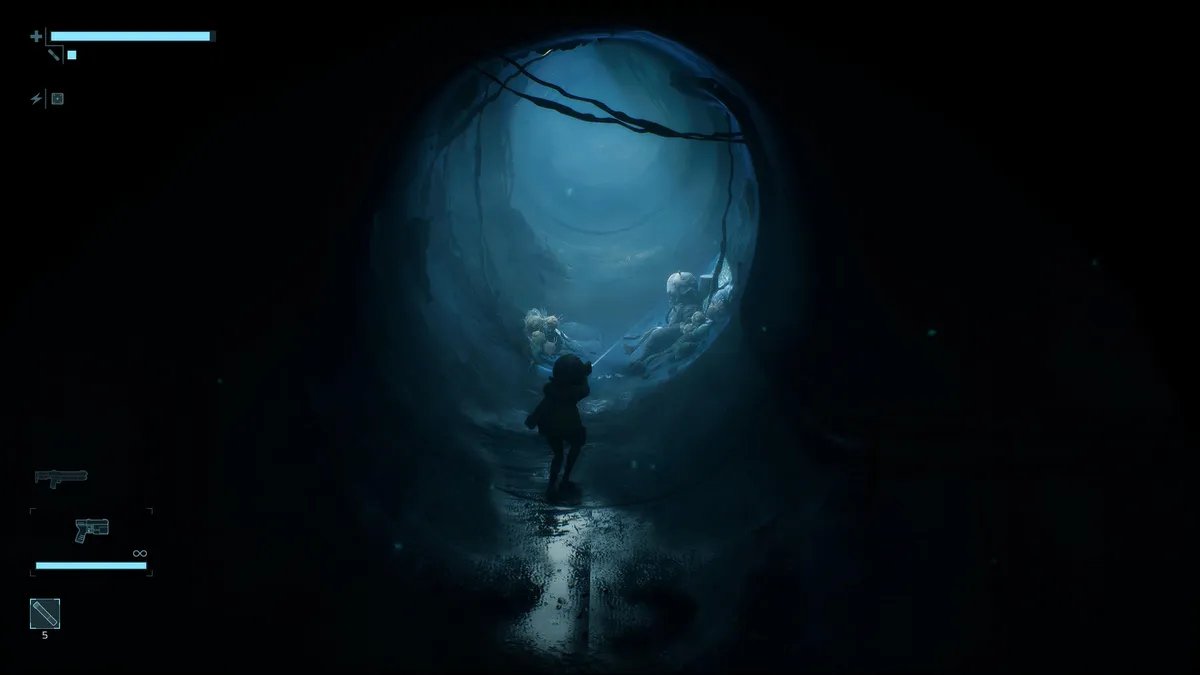
I have a confession to make about my time with End of Abyss, but first, I should tell you the tale of my journey through its dark, mechanical hallways. Before playing this game, I was enthralled by its promise. “A new game from one of the lead developers on the Little Nightmares games” is already a thrilling pitch, and that's before you get a good look at the thing. It's all moody corridors and goopy creatures, framed in gorgeous naturalistic lighting and crunchy sound design. The main character is a little guy in space suit looking attire, and unlike Little Nightmares, the devs gave them a gun. Finally, rather than the usual run and hide routine, we can cut the crap and just blast our way out. It just looked like a very cool game, and one I was keen to check out as soon as possible.
The first surprise was discovering that this game was less a linear adventure platformer like Little Nightmares, and is instead closer in design to a metroidvania. There's a number of clear influences to pull from. Resident Evil stood out to me right away, with its focus on survival horror mechanics and the creative camera angles utilised to evoke certain feelings in the player, like awe at the scale of a structure, or tension from entering a new room, not knowing what might await on the other side. Another one was the Metroid games. The sci-fi aesthetic is one thing, but the focus on acquiring tools to not just build out your arsenal but also to use as methods of opening up the map for further exploration draws a pretty clear link. Furthermore, the game gives you a scanner and encourages you to log everything you come across. Scanning enemies reveals weaknesses, and scanning locked doors reveal what key they might need to bypass them. Keys are another obvious Resident Evil staple.
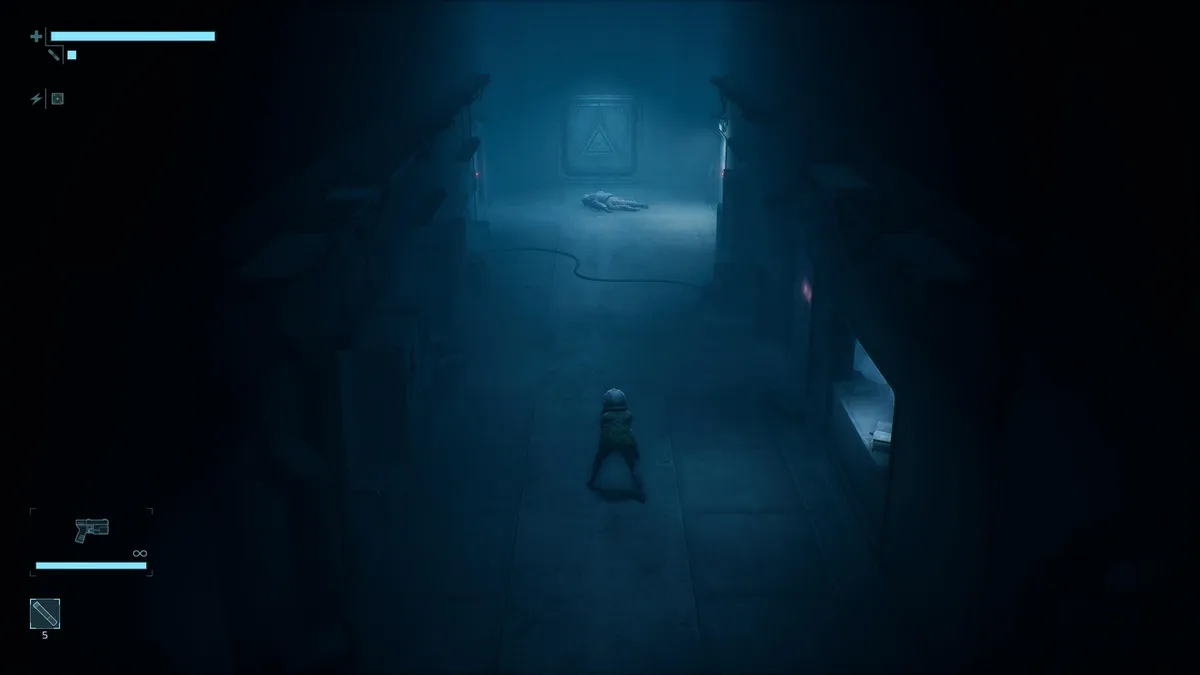
These are all good signs, for the record. I make comparisons not to suggest that End of Abyss is derivative. Far from it, in fact; this game consistently finds ways to excite in unexpected ways. It takes the tools of what has come before, and manages to evoke those experiences all over again with a fresh coat of paint. I think the Little Nightmares-esque presentation paired with the design ethoses of Resi and Metroid creates an experience that's wholly unique. I certainly found myself enchanting in those early hours, many times.
As much as I liked what developer Section 9 was putting down, though, some design decisions immediately stood out as potential red flags. For one, you're given a pistol right from the start. Other weapons become available, like the shotgun or the rifle. So far so good, right? Well, after my first death to a boss whom I pumped all of my shotgun shells into, I awakened in a revival pod. Essentially, the implication here is that when you die, yout body is reprinted in a pod and you're sent right back out, a la NieR Automata. However, in the process of honouring this world-building choice, Section 9 made the baffling decision that not only do you die, you also lose all the ammo and equipment you might have dispelled prior to death. It's an incredibly unforgiving design decision, and they must have realised that, because to compensate for the possibility of the player softlocking themselves, the starting pistol has unlimited ammunition. You can shoot peas from it forever if you like, halted by the occasional heat expulsion.
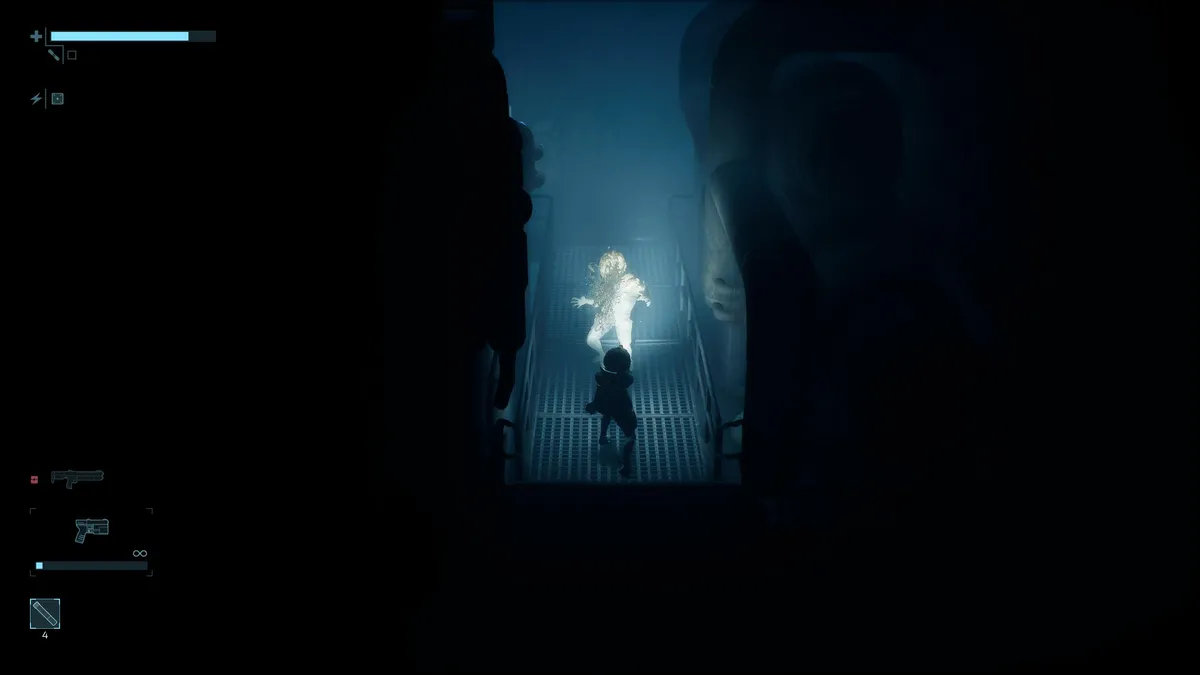
What this did was it made me incredibly hesitant to use my other weapons, because of the possibility that I might waste precious resources on a fight I might ultimately lose, making the investment utterly worthless. So is ammo limited? No, not necessarily. You don't pick up shotgun shells and rifle rounds off bodies or in drawers. Rather, you craft them, using the game's currency, fragments. These come from defeating enemies or they can be found in the environment, but I wonder if it would have been simpler to just make ammo function this way as well. However, fragments can also be used to improve your guns or make tools like grenades or flares, so it needs to be a constant resource. Replacing that with ammo pickups might have messed with the balance. Where this all ends up is a system where if I run out of ammo and/or bombs, I can choose to either go around farming enemies until I can make more, a tedious process only possible with a weak pistol, with the possibility that I might spend all that time, make new ammo, then waste it all again on the next few attempts. Alternatively, I just barrel ahead, using only my pistol, and brute force through as many encounters as possible. I went with option B, but frankly, both choices suck.
What makes this system worse is that it naturally disincentivises experimentation. Some enemies and bosses are vulnerable to certain approaches, a fact that is self-evidently good combat design, but because the strict game economy forces you to play very conservatively, it meant that I would avoid trying too much for fear that I'd burn already limited resources. This isn't interesting decision making. It's just tedious, and honestly made me feel insane. I kept spinning the situation I was muscling through in my head. Why did they do this? I'm not a game designer by any means, but this feels wrong on such a basic level. Why do it this way? Is it to make the game feel challenging? It doesn't create interesting challenges, it just puts a block on engaging with those challenges in creative ways. Did it start with one design decision which spiralled into a million bad choices? What boggles my mind the most is that so much frustration could be alleviated if the developer just got rid of the punishment of losing your stuff upon death. It doesn't feel like carelessness to me; it just feels cruel, at the expense of everything else the game does right.
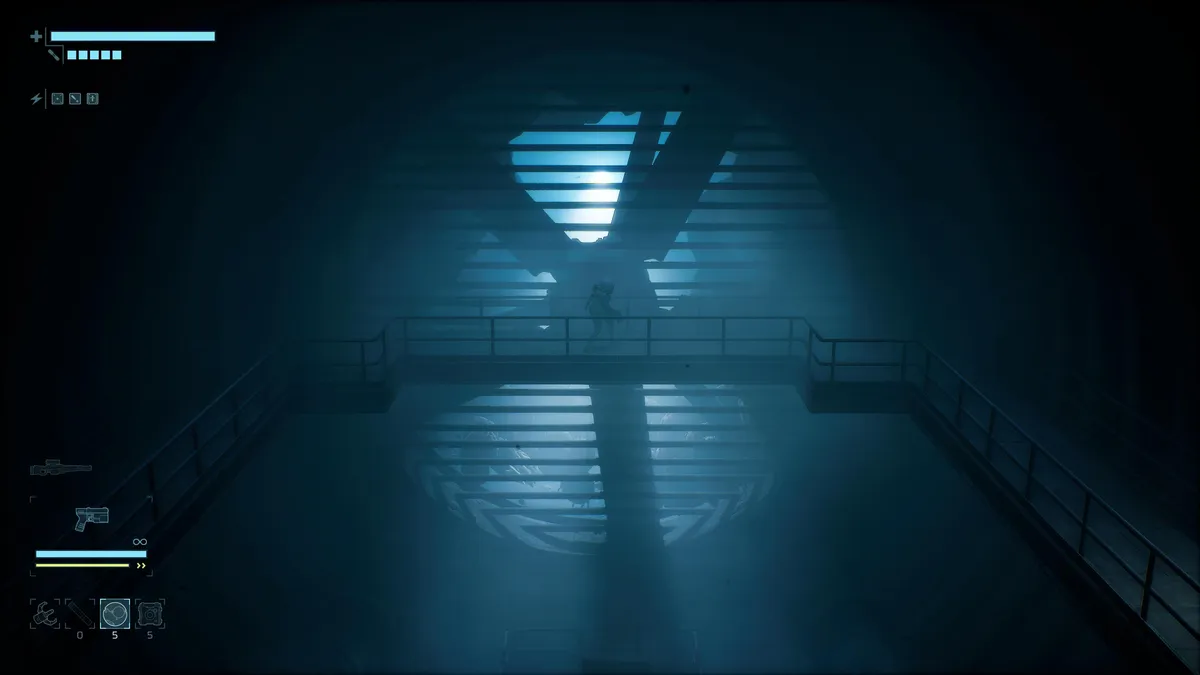
What does feel careless, however, is the level design. Like I said before, this game is structured kind of like a metroidvania, separated into various zones you visit in more or less a set order, which open up upon finding the right tools to proceed. Sometimes it's as simple as keycards, while other times it's a weak wall in need of exploding. This is all pretty fun and I'm a real sucker for unravelling a map little by little, returning to old places and discovering new hidden depths to them. I like metroidvanias! However, I can't deny that there were times when I got confused on what I was supposed to be doing, and where I was meant to go. So many plot critical paths are hidden in obtuse ways that look identical to minor secrets, and that didn't feel right to me. The game doesn't do a great job of telegraphing what parts of its world are important. I don't think this is intentional, in a cool Dragon's Dogma 2 way of “you can go wherever you like, however you like” because if that were the case then the game wouldn't be so rigid in its intended pathing. Those explodable walls I mentioned earlier? I thought a grenade might work against those, but it didn't, and after wasting one in my failed attempt, I later discovered that these required a very specific C4-style item instead, despite them functionally serving the exact same purpose in-universe. So, for a game to be that specific while also failing to properly communicate where the player ought to go creates an experience that feels at odds with itself.
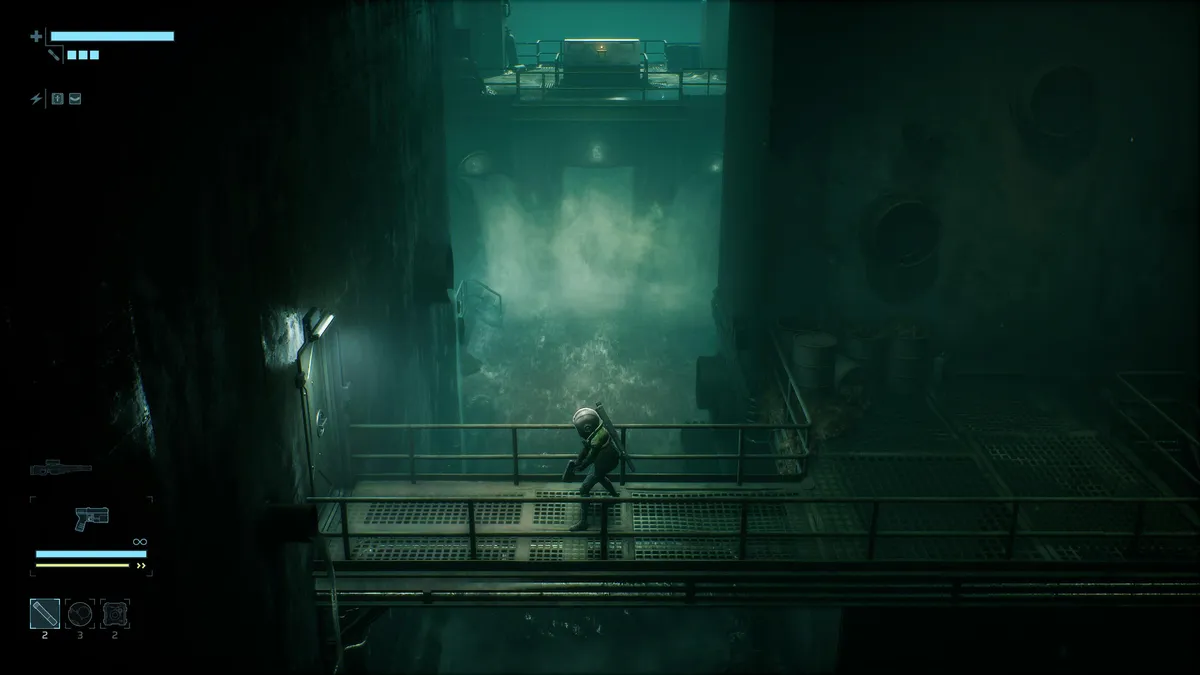
What frustrates me even more is that End of Abyss occasionally does have these moments of foreshadowing and considered design. Walking onto a balcony shows a large metal room, and in the distance, a large shadow looms and then vanishes through a doorway. You know where you need to go, but also that something will be waiting for you there. You reach a locked door, but placed in the background of the shot is a large lever illuminated by a red light. You can't get there yet, but when you find the key, this is the place to close off the pipes. Now and again, this game demonstrates these little moments of game design genius. It's clear that at least a couple people at Section 9 knew what they were doing, and did it incredibly well. However, these beats are few and far between, while the rest of the game is a grey miasma of bumbling around different doors and figuring out which ladders are accessible or not.
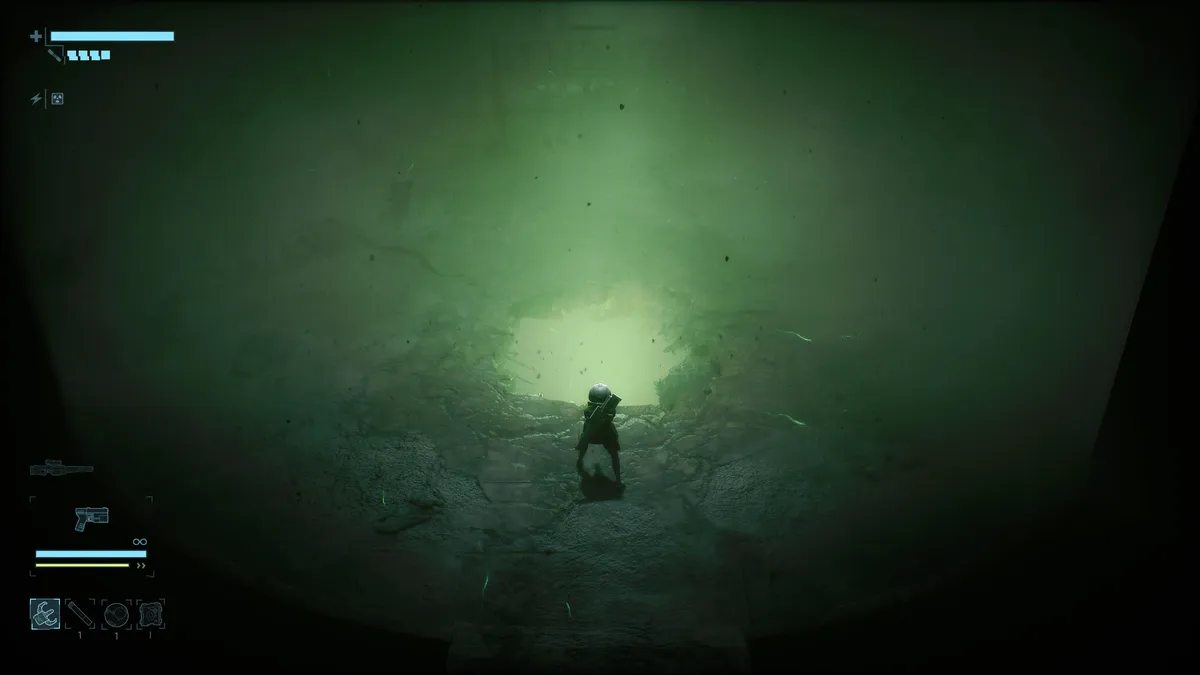
At one point, the game seemed to weaponise my own understanding of metroidvania design against me, and I can't tell if it was evil genius or just shite. In trying to find the next key area, I stumbled upon a radioactive site. As I entered the green cloudy space, my screen beeped and my character started taking damage. My sensible gamer instinct was to assume that I needed some kind of radiation protection in order to bypass this, which I had simply not stumbled upon yet. And so, I backtracked for a couple hours, digging through every nook and cranny for anything resembling what I might need. No dice. I admitted defeat and looked up a guide and discovered that, in fact, you are SUPPOSED to walk into the radiation, poisoning be damned, and just tank it. It turns out you don't take a whole lot of damage to it, but I didn't realise at the time because I was generally trying to avoid an unnecessary death. The thing is, I can see the potential in a moment like this. Perhaps the subversion is intentional, meant to deliberately paint your character as a victim to their mission, actively poisoned by the air around them all to carry out their function. There is, possibly, something to that, but I can't say for sure if any of it was deliberate because the utter lack of communication by the game in this being the expected route to take means it might just be careless design.
End of Abyss is endlessly frustrating due to moments like these. At times, the game is directed beautifully to evoke those moments of carefully orchestrated panic famous in games like Little Nightmares or even Resident Evil. Most of the time, however, it forgoes that responsibility in favour of letting the player run around aimlessly until they accidentally stumble into the right answer. Why is the game like this? Is it a cynical attempt to extend the playtime, or did the developers just not really care about that aspect of the game very much? Either way, it creates an experience that appears to fall short of its own potential.
A key question in all of this, one I kept coming back to as hours passed, was this: why do I keep returning to End of Abyss? I'm not exactly having fun with it, and a lot of its very soul bugs me to no end. I spent a lot of time complaining about this game to my flatmate while continuing to play it. Why? God knows I've quit other games for much less. I bought Ace Combat 8: Wings of Theve at the same time as this, a better game by most or all metrics. Why not play that instead, and leave this mediocre mush in the dust? I've got one word for that, and I hope you'll walk with me on this: vibes. For all the many shortcomings of End of Abyss, it exhibits nothing short of presentational excellence.
In a sense, this is what I wanted the most from this game. Like I said earlier, I was surprised to find that this game was closer to a metroidvania than a Little Nightmares style horror adventure game. If it had been that - back to back horror setpieces with some light combat stuff sprinkled in - then I probably wouldn't have complained. This game looks utterly stunning. Every room is a masterclass in atmosphere. The sound design is consistently riveting, from loud squelches down to subtle changes in footsteps. Your character holds a gun as you'd expect when running around, but holds it a little differently when going up and down stairs.
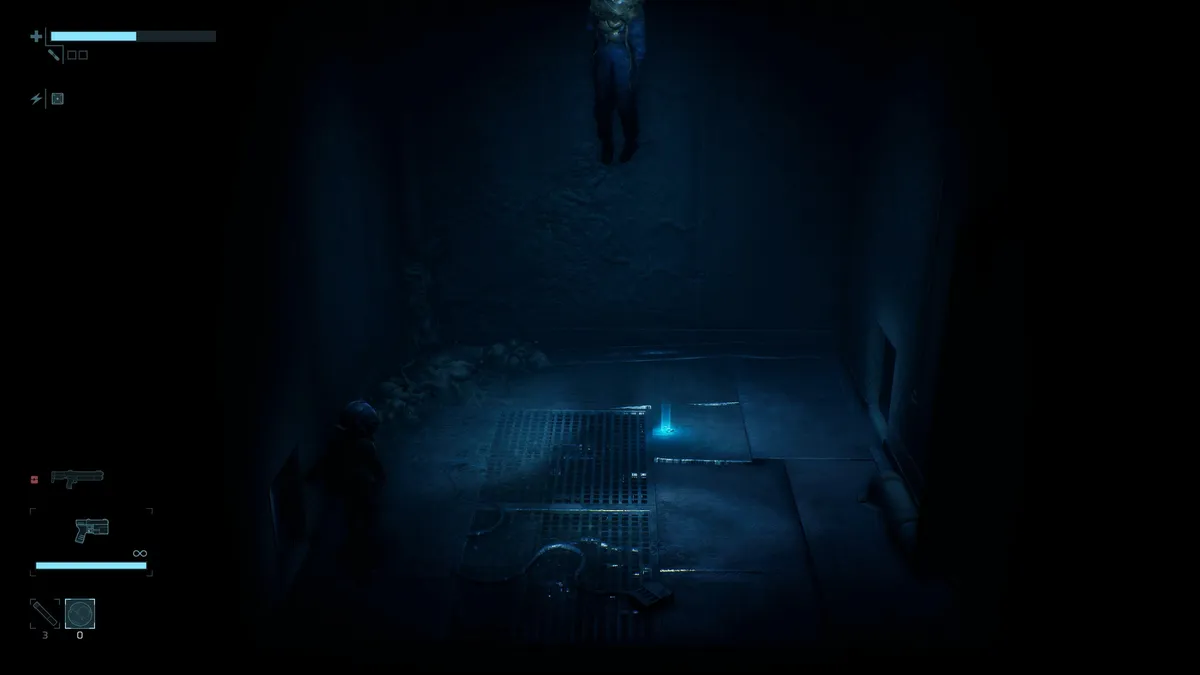
There is such phenomenal attention to detail here, down to the littlest things, and I could not stop myself from wanting to see more. The story starts off very vague, and that doesn't really change, but this approach is like crack to me. Just like Little Nightmares or Inside, the less you tell me about what's going on, the more inclined I am to sleuth. Before long, I'm looking at every monster, reading every diary entry and examining every strange visual, in an effort to piece this mystery together. More often than not, I'm way off the mark on whatever is actually happening, but that doesn't matter because the joy of tiny discoveries is enough. End of Abyss wrapped me around its little fingers with its weird and enthralling world. I couldn't leave it alone. I'd suffer through even some genuinely maddening moments if it meant peeling the layers off and getting a look at that core.
The longer I stuck with End of Abyss, the less combat bothered me. It was still the same pistol-dominant experience, but inevitably, I began to learn each enemy's patterns and mastered them. Traversal became less of a chore the more options I had, and running through familiar places is less burdensome when I knew where I was and where I was going. Eventually, I was able to fully upgrade my pistol, unlocked a charge shot that turned out to be kind of a game changer, and for a while, it felt like I might actually like this game after all, warts and all. You know, I'd say to my now undoubtedly beleaguered flatmate, it's got problems, but I definitely like it. It's worth seeing through, I'd say to myself. Convince myself.
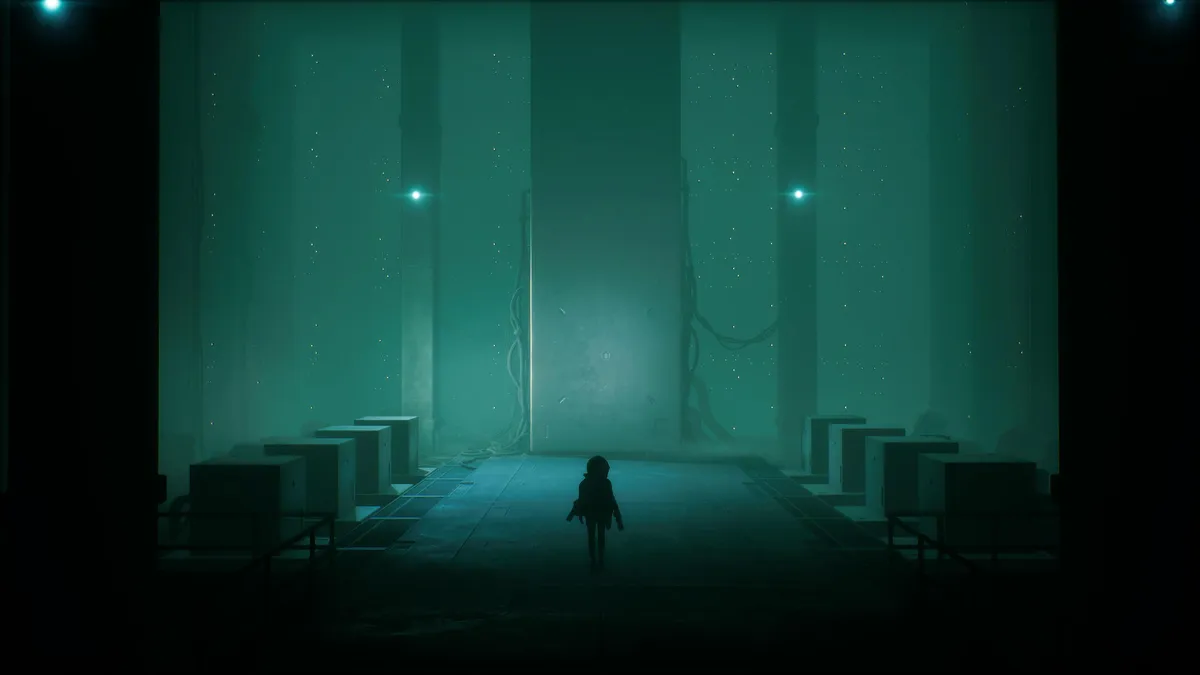
Time for my confession: I never finished End of Abyss, and I likely never will. I made it really far too. My PlayStation account says I dipped around 16 hours into this thing. That's more than most games I've played. So what went wrong?
Well, I reached my breaking point. Near the end of the game, you're presented with a cryogenics lab, and at the end of the lab is a boss called ‘Failed Experiment’. It's a toughie, taking very little damage to my pistol shots, even the charged ones. Later in the fight, other enemies appear, and you have to juggle that as well. It is a hard fight. However, I found a flamethrower moments prior, and the scanner showed that it's weak to fire. Okay, in that case, let's try some flames! This goes better than my last few attempts, but the fight is still hard, so I start to run low on ammo. I'm already low on fragments, having just invested a lot of them into a gun upgrade. I had maybe one chance left before having to resort to grinding for more fragments or brute force, the Sophie's Choice I had thought was long behind me. Nevertheless, I locked in, and by some miracle, I made it through. I BEAT IT. Failed Experiment fell to the ground and disappeared. However, the other enemies did not, and out of ammo and on the brink of death, I fumbled at the last gasp, and died. No worries though, I thought: I beat the boss, and if this game is good at anything, it's remembering what you did. So, I ran all the way back, only to discover…!
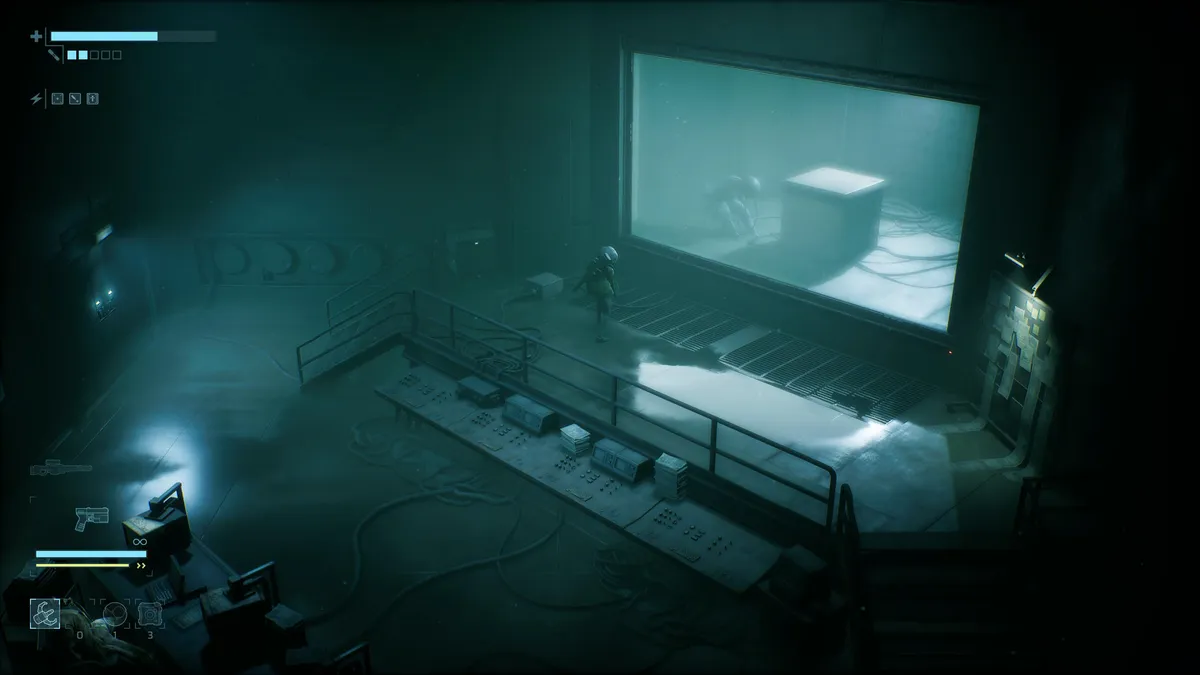
It was back. Somehow, Failed Experiment returned. My ammo, of course, had not. Presented with the prospect of hours longer doubling back to the main map, grinding for fragments that enemies might not even drop at times, and hoping I didn't fuck it up again, I called. Time of drop: 5:45pm, October 7th 2026. Fuck this game.
I didn't even mention the fact that this game has a myriad of technical problems. More than once, if I tried to leave an elevator too soon, I phased through the floor. Another time, I survived a gruelling combat encounter, only to find my scanner I needed to progress wasn't equipping, so I had to reset the game and lose that progress. One time I clipped into a wall and got stuck there, again leading to lost progress. These just feel like more fuel to the fire of thoughtlessness that permeates so much of this game at its core. It feels weird to say, but I've never played a game in more desperate need of a second opinion.
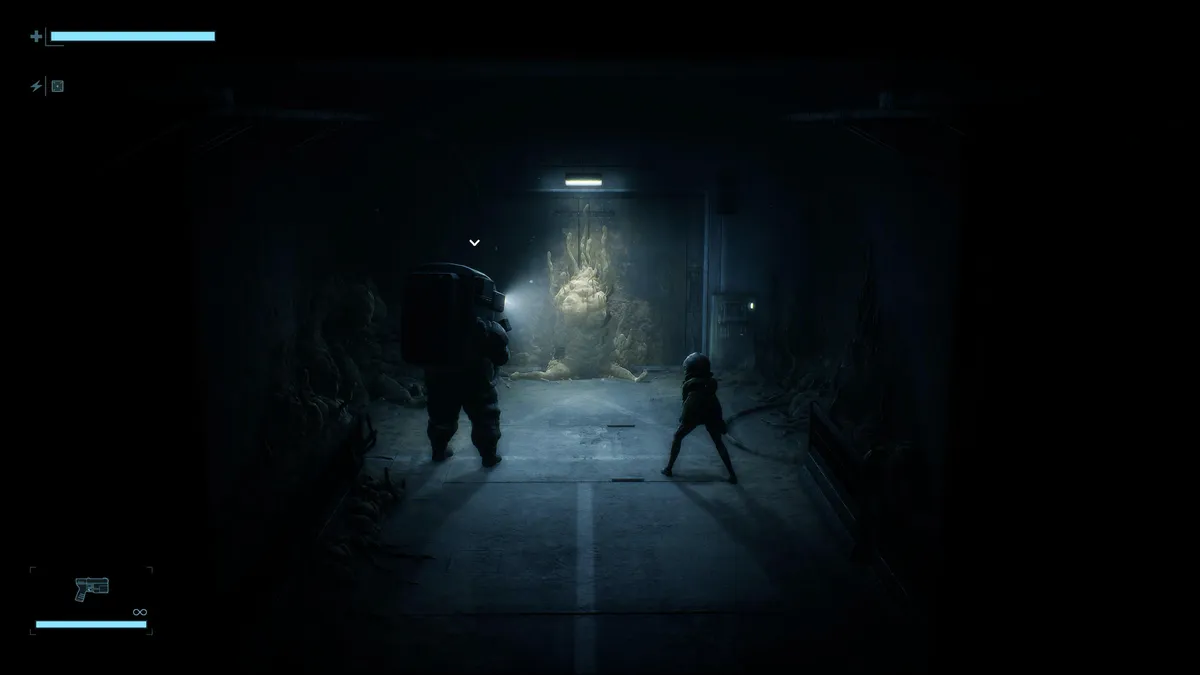
Despite all this, I can't stay mad at End of Abyss. It's unfortunately too cool to hate. In many ways, it is the game I wanted. A rich, mysterious underground world just waiting to be discovered. A feast for the eyes and ears. A thrilling descent into hell for a little guy in a world far too big to fit them. But its many excesses, its hostile design decisions, and its utter indifference to the player's time and efforts make End of Abyss a profound disappointment. As soon as I'm done writing this, I'm looking up a playthrough and enjoying the rest of what the game has to offer. At least then I might have fun.