Strangers In The Pool, and the Terrible Ordeal of Being Known
James Guthrie
Faith is this all consuming thing. True faith in a person or power is probably one of the most vulnerable things you can express to your fellow beings, because it immediately subjects you to so much risk: you could be outed as something you are or are not; you could be betrayed by someone you love so much who it feels afterwards never loved you to the same extent, and you have to realise that maybe they never did; you could end everything in a violent and disastrous way for you and everyone around you, only to reconcile with a hug, or a text, or just another conversation where you express that your faith was not shaken despite all that went on. Faith is nebulously unkind, and so we ask, is the reward worth the ordeal? Faith is trust, it is love, it is hope, it is all these vital little aspects of being human: should we hold it so dear when it is so easy to break, and so harmful to lose?
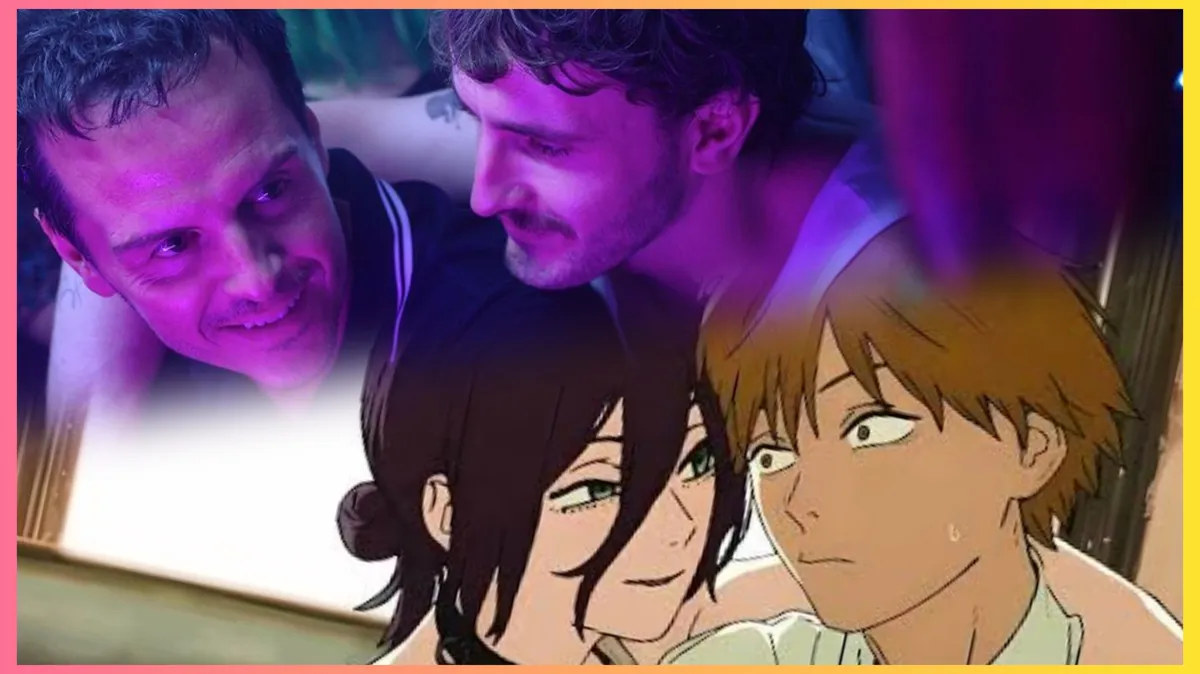
Spiel over. Philosophical question asked. Did you know that two of the most devastating movie scenes of my life made me reevaluate everything I thought about faith? Not religious faith, just the act of faith; putting the level of all this complicated emotion and thought into a relationship to someone or something, to both people and concepts, then holding it in your soul a bit, vulnerable and exposed and so easily smashed in an instant. It's complicated and deeply personal to examine your own acts of faith, your relationships to lovers and friends and ideals and dreams; so what better way to do it than through the lens of the queer experience portrayed by Andrew Scott and Paul Mescal and the hit Japanese anime/manga series Chainsaw Man; if you had an aneurysm reading that sentence, please remember I am schizophrenic and also deeply deeply built wrong. Strapped in?
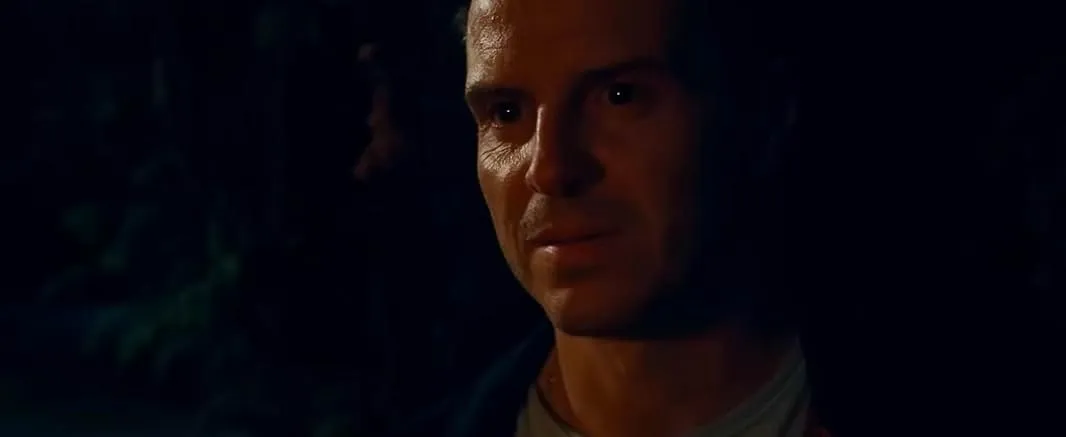
All Of Us Strangers is my favourite gay movie, even though it isn’t really plot-wise all that much about being gay. Minor spoilers ahead in this plot summary. Andrew Scott portrays Adam, a very British writer (he works in tv but that’s not important) living on his own in a very large, very modern new block of flats, where he is one of two occupants (this is important). To tell the story in its vaguest terms, Adam starts off deeply lonely, then he meets his singular neighbour (the beautiful Paul Mescal, here named Harry), who drunkenly propositions…something, but the romantic tension is immediately obvious despite an initial rejection. The story that follows is probably best described as a journey of recovery; Adam returns to his perfectly middle class childhood home, where he “meets” his parents, a typical British couple who caused him lots of trauma, and simultaneously back at his flat he develops a deep and passionate relationship with Harry, falling very quickly for him. Adam gradually begins to confront his past while developing a new sense of comfort in the present, and it all goes swimmingly.
I have cried all three times I have watched this movie because of two scenes, which become a throughline that keep me crying to the end. On one journey back to his home, Adam’s mother asks him the dreaded question of queer boys everywhere: have you got a girlfriend? He gets evasive, then direct, then in a moment of abject terror for any queer member of the audience, he says:
“I mean I’m gay.”
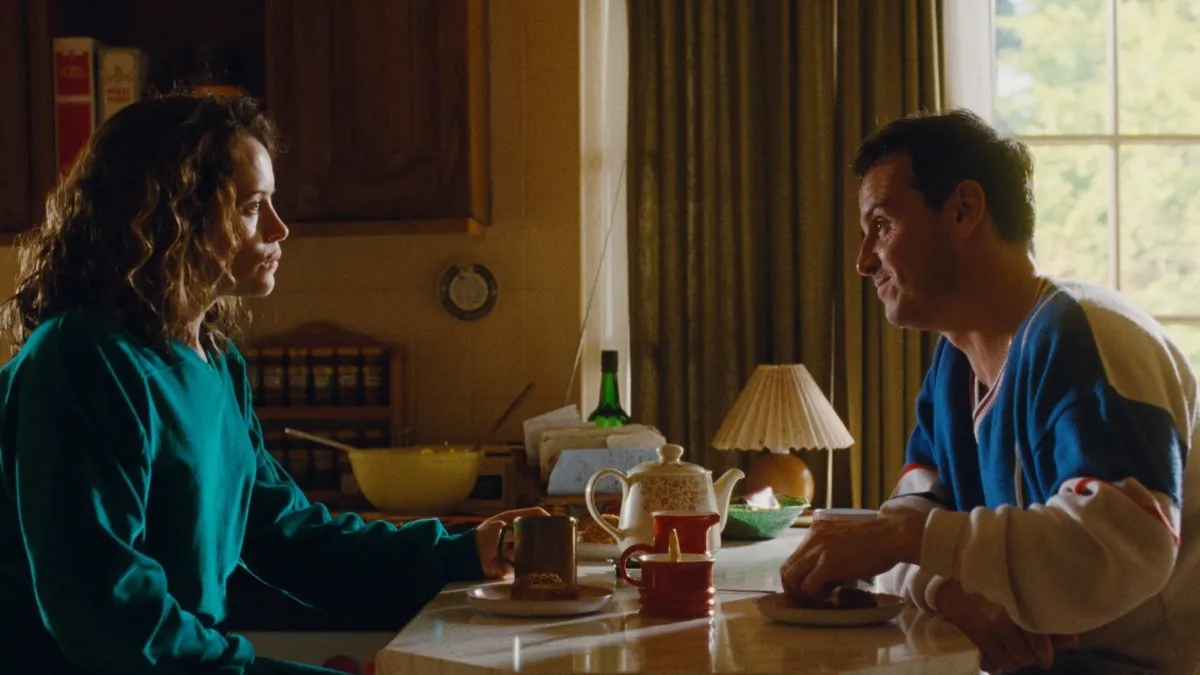
His mother looks at him, and says “as in homosexual? Really? Since when? How long? You don’t look gay. I’m just feeling a bit overwhelmed right now. I just don’t really know how to feel.”
“What parent wants to think that about their child? Are they nasty to you? Does everyone know? Don’t you want to get married and have a family?”
Questions like a hail of bullets upon that gay little boy I once was. Everything I ever feared would happen, some of which did happen, portrayed brutally and effectively on screen. A mother centres her concerns over the identity of her child; the conversation turns defensive, and ends awkwardly. The only sound left in the cinema was the occasional little whimper from the audience, as Adam gets up to leave the house.
I was lucky, in some ways. To my high school friends, I hid being gay for fear of being outed, then in uni, as I actually felt the freedom to date away from my very culturally Catholic and countryside upbringing, I told my friends I was bisexual; a grace period to let me date men while still hoping (begging, praying) for my attraction to women to just wake up; and then I kissed a man, and it felt right, and I knew that, unfortunately, I was never really going to be able to hide “what I was”. Who I am. When my first boyfriend and I were becoming official, and my relatives kept asking the relationship questions, I reached a mental breaking point; hiding was no longer sustainable, so it meant either come out and face the music, or, in my mind, kill off all hope in myself - ”who I am” - and just be celibate and unhappy forever. Dramatic teenager moment. So I came out. Reactions were mixed. My grandad knew. My sister was proud. My mum didn’t know what to say. My dad never really spoke to me again. A whole side of my family was cut off from my life; on the other side, gossip and opinions in hushed tones. It could have been so, so much worse, and I had feared far worse; but for the first time in my life, I actually felt like a person. I told my friends, I went to Pride parades and gay clubs, I had a boyfriend, I wore colours, I dyed my hair. Adam takes comfort in Harry, their relationship progresses, and they talk about who they are, not what they are; they don’t define each other, but they seek comfort and love, intimacy, faith to the degree of absolute trust; they become more, a couple; and Adam starts to heal. He confronts his father on the next journey, and gets something I’ll never get from the experience:
“I’m sorry I never came into your room when you were crying.”
“It’s okay,” Adam responds.
“No, it's not okay, though, is it?”, his father weeps.
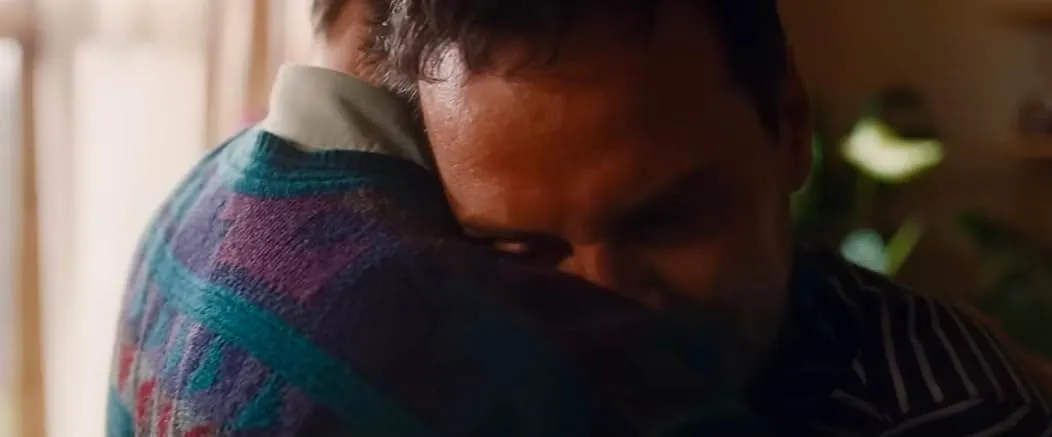
They break down in each other’s arms, openly sobbing and apologising. They affirm that they love each other. Adam’s shattered faith in his parents pieces back together in streams of tears from both men, and from mine. Every queer person I’ve ever met has a story about a coming out, normally multiple, gone wrong in some aspect. More than a few will tell you, proudly, including myself, what it cost us. A family member. Many family members. Communities. Coworkers, jobs, confidence, lovers, friends, other identities, pride, hope, the person they were before, even the chance to communicate. Coming out, in any form, is an act of faith in oneself: I am what I am, and I will be seen for who I am, not what you think I am. It is, in turn, often the final shattering of faith in others, or dreams, or an ideal: I must give up your view on me, or this view on the world, or this dream of this kind of family, or that kind of wedding, or this type of community, and so on. In that faltering faith, a wonderful new kind emerges: faith in oneself. I came out. I did what I had to do.
A wonderful new world opens up. Your faith branches off: tolerance from a parent becomes acceptance, and acceptance builds a new bond or rebuilds the old one; friends become more than friends, found families replace those we lost or gave up, connection becomes meaningful and vital, and we find a spark in ourselves that wasn’t there before. We live proudly. We live in defiance. We grow not to ask for acceptance, but to live as though we have it, and to challenge our past, to become something more than what we were, to overcome trauma, to heal.
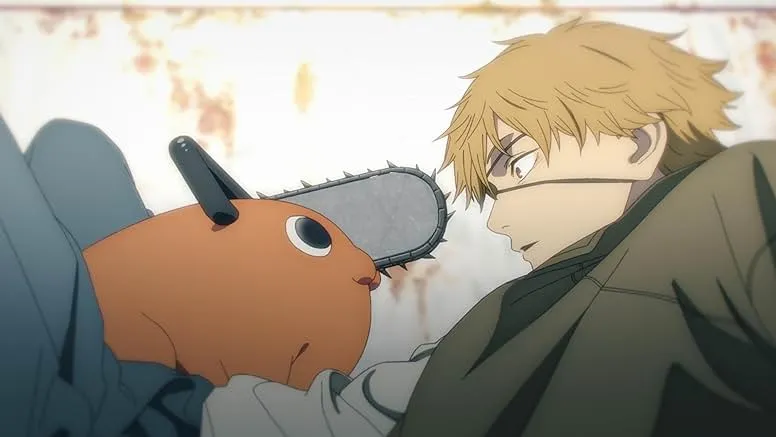
Chainsaw Man is about the titular Chainsaw Man, Denji; a boy whose body is fused with a chainsaw devil, in turn making him a monstrosity of sorts, a hybrid of monster and boy. Denji is your prototypical teenage boy: feral for boobs, messy, unsure of his place in the world, and desperately lonely and unsure how to form connections. Denji is also not quite typical in one aspect: though a hybrid devil, he was always, even before this, a representative of the Other. Denji grew up in poverty, orphaned, has no family or friends to speak of, and his one companion is fused into his heart and functionally deceased, giving his life to save Denji’s. Taken in by Japan’s “Public Safety” Devil Hunters, he is constantly abused, used as a weapon, nearly sacrificed by colleagues, forced to work with devils who openly hate humans and humans who openly hate him, and yet, he has this wonderful optimism that things are good and can only get better. In the Reze arc, he meets Reze, a similarly orphaned, similarly lonely cafe worker who he is immediately attracted to, and who is immediately attracted to him.
As their relationship develops with Denji frequently visiting Reze at her job and Reze teasing him, they realise how similar they are, knowing so little about their world, and Reze decides to take Denji to school. Literally: Reze takes Denji to a school at night, and they imitate experiences with each other they never got to have, with Reze imitating a teacher and Denji the student as they go through simple maths and English in the classroom, before they head up to the school's rooftop pool. There, Reze strips and dives in, and Denji, knowing if he does so his boss may see it as a betrayal, does the same, despite being unable to swim. They dive and splash and have fun as kids do, the romantic undertones secondary to the mutual trust these two kids who trust no one find suddenly in each other. Reze holds out her hands to Denji as he struggles, ready to embrace him:
“The things you don’t know…or can’t do. I’ll teach you! I’ll teach you everything.”
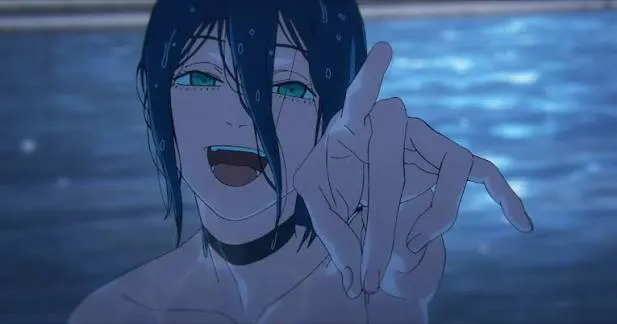
Denji takes her hands, and Reze shows him how to kick, how to breathe in the water, how to swim in the pool, and Denji sinks into his feelings for her over all the other people he has met. Reze, to spoil later events, is revealed to have lived a very similar life to Denji, and is used as a weapon by her employers, has no friends or family to speak of, and finds her first companionship ever in Denji.
I think of that pool scene so often. It is intentionally childlike, in a way, replicating the fear of the water inherent to being unable to swim. Reze is not really “teaching” Denji to swim, and whether she can or not is irrelevant; for them both, they are simply naked and happy and finally able to enjoy a moment of respite with someone who understands them. The moment feels intimate. Charged with foreshadowing and shadowed by romance, but also, separated in some way from the machinations of the plot, it is just two kids enjoying a sweet moment of happiness in a world that otherwise hates them. Their choice to put faith in each other is devastatingly effective, and barely brought across in words, just in action.
Being the Other is oftentimes the worst thing you can be. Most excruciating of all about it is the crushing sense of loneliness, especially as a teenager: I am experiencing the worst feelings I have ever known, and I have no one to confide them in, so I take it out on my own faith in everything. We shatter ourselves because we feel or are made to feel different, and we lose faith that others can take solace in us, see how alone we are, or even just provide comfort; we become a dark void to protect ourselves. Then, you meet someone, or have a little chat with someone you know, and you hear something about what happened to them, or they tell you indirectly that they feel something akin to what you feel, a glint of emotion in innocuous conversation; slowly, perhaps painfully, and so reservedly, you can drag each other back into the light, up from drowning in the pool, and you learn how to swim, together. You find that faith in another person, and you think, “You know me, and I know you; you know who I am.” That little bit of connection can be all you need to make more connections, to grow, to love, to shatter yourself or let yourself be shattered but with the knowledge that you can rebuild. To plant that seed of faith in yourself.
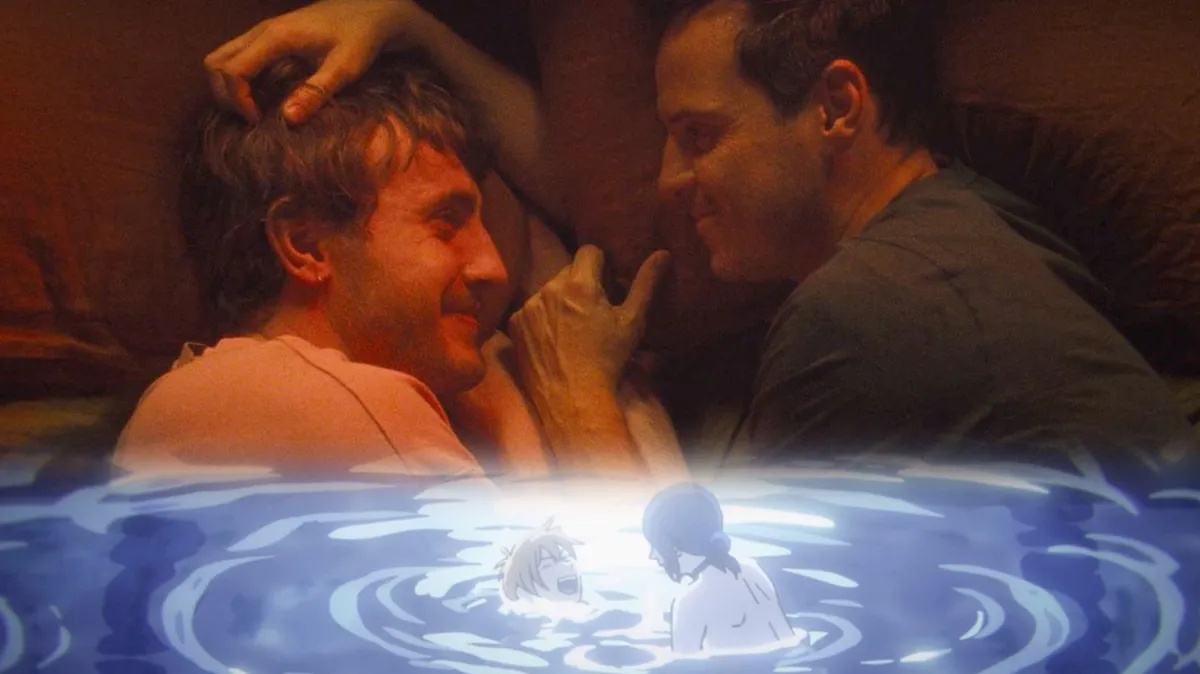
To feel that you are not alone is a powerful thing. To be known, to know oneself, to keep that faith growing knowing how painful it might be to have it falter again: it is the most difficult thing you will ever do, but so, so worthwhile.